
When a full-arch bridge feels bulky, fractures repeatedly, or never quite lets you eat with confidence, the problem may extend beyond the visible teeth. A titanium framework for dental implants is the engineered foundation beneath many premium fixed full-arch restorations. It helps connect the restoration to strategically placed implants with the precision and strength needed for daily life.
For someone who has spent years hiding a smile, avoiding steak or fresh apples, or dealing with loose dentures and failing bridgework, the framework is not merely a technical detail. It can be part of what makes fixed teeth feel stable, refined, and dependable. Experience makes all the difference, especially when designing a restoration meant to withstand the forces of a full mouth.
What Is a Titanium Framework for Dental Implants?
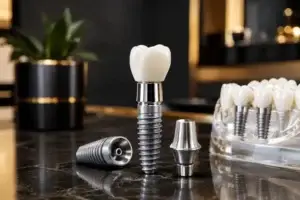
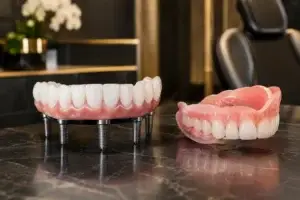
In a full-arch implant restoration, dental implants are placed in the jawbone to serve as artificial tooth roots. The visible bridge is then secured to those implants. A titanium framework, sometimes called a titanium bar or substructure, is a custom-made internal support that helps distribute biting forces across the implant system.
Think of it as the carefully engineered structure beneath the final smile. It is designed digitally to fit the exact position and angle of each implant. The framework may support a zirconia bridge or another restorative design selected for the patient’s clinical needs, bite, esthetic goals, and long-term plan.
Titanium has been used in implant dentistry for decades because it is biocompatible, strong, and comparatively lightweight. More importantly, it can be precisely milled to create a highly accurate connection between the implants and the final restoration. That precision matters. A poorly fitting prosthesis can place unnecessary stress on implants, screws, and the surrounding bone.
Why the Framework Matters in a Full-Arch Smile
The visible teeth are what patients notice first. Yet the components underneath are often what determine how a full-arch restoration functions over time. A titanium framework provides a stable platform for the prosthetic teeth, helping the restoration resist flexing under normal chewing forces.
This is particularly relevant for patients who have lost most or all of their teeth, have a history of broken dentures or bridges, or have been told they need extensive reconstruction. A full arch must do far more than look natural in photographs. It must tolerate repeated bite pressure, support clear speech, and allow comfortable eating day after day.
A well-designed framework can also help a bridge maintain its intended shape and fit. This is valuable when creating a smile that appears natural rather than thick, flat, or overly artificial. The restorative team must balance strength with the available space between the upper and lower jaws, the patient’s facial proportions, gum display, and desired tooth appearance.
Titanium and Zirconia Work Differently
Patients sometimes hear about titanium and zirconia as though they are competing choices. In reality, they can serve different roles within the same full-arch restoration.
Titanium is commonly used for the hidden structural framework because of its excellent strength and its long clinical history in implant-supported treatment. Zirconia is often chosen for the visible portion of a premium bridge because it can be shaped and characterized to resemble natural teeth while offering impressive durability.
The right design is never one-size-fits-all. Some patients need a titanium-supported zirconia restoration because they have a strong bite, limited restorative space, or a history of breaking dental work. Others may require a different approach based on implant placement, jaw anatomy, bone condition, hygiene needs, or the condition of their opposing teeth.
The key is not simply choosing the most advertised material. It is selecting materials and a framework design that work together with the surgical plan. A beautiful bridge cannot compensate for implants placed without adequate restorative planning, just as excellent implants cannot deliver their best result beneath a poorly engineered prosthesis.
Precision Begins Before Surgery
The strongest framework is only as good as the plan behind it. At an advanced full-mouth implant practice, treatment begins with a complete evaluation of bone volume, bite forces, facial structure, gum health, remaining teeth, and the patient’s goals for comfort and appearance.
Digital planning allows the surgical and restorative teams to work from the same blueprint. Implant locations can be planned in relation to the future bridge, rather than treating surgery and restoration as separate events. This prosthetically driven approach helps create a more predictable fit, better support, and a smile designed around the person wearing it.
For patients with severe bone loss, failing implants, or long-term temporary teeth, planning becomes even more consequential. These cases may require removing compromised teeth, managing infection, revising previous work, or creating a solution around limited bone. A bargain clinic may focus on the fastest possible placement. A comprehensive team focuses on whether the implants, framework, and final teeth can function together for the long term.
What Patients Should Expect From a Premium Full-Arch Restoration
A titanium framework is custom-made, not pulled from a shelf. After implant placement and healing milestones, detailed records of the implant positions are captured digitally or through precision impressions. The restorative team then designs the framework and final bridge to fit those exact specifications.
The bridge is evaluated for fit, bite, phonetics, appearance, and cleanability. That last point deserves attention. A fixed full-arch restoration should be designed so patients can maintain it at home and return for professional maintenance. Fixed does not mean maintenance-free. Implants and restorations need ongoing care, just as natural teeth do.
At Golpa NexGen Smiles, in-house fabrication and digitally planned treatment support close coordination between the surgical and restorative phases. For patients traveling to Las Vegas, this integrated approach can reduce the uncertainty that often comes with being passed between separate offices, laboratories, and providers.
When a Titanium Framework May Be Worth Discussing
A titanium framework for dental implants may be especially relevant if you have an existing full-arch bridge that feels unstable, has fractured, or requires repeated repairs. It may also be worth discussing if you are comparing permanent full-mouth implant options and want to understand what is beneath the visible teeth.
Patients seeking a second opinion should ask direct questions: What supports the bridge? How will the restoration distribute bite forces? Is the design customized to my available space and bite? What happens if a repair or maintenance appointment is needed later? Clear answers reveal whether a treatment plan has been engineered for the individual or assembled around a marketing promise.
There are trade-offs. Titanium frameworks add complexity and cost compared with some lower-priced restorative designs. They are not necessary in every case, and no material eliminates the need for skilled planning, oral hygiene, or follow-up care. But when a patient needs a highly stable full-arch solution, the framework can be an essential part of protecting the investment.
A Foundation for More Than a New Smile
The goal of full-mouth implant treatment is not to give someone a bridge that simply looks good on the day it is delivered. The goal is to restore the ease of eating, speaking, laughing, and smiling without calculating every movement first.
If you are living with failing teeth, unstable dentures, broken bridgework, or a temporary solution that has lasted far too long, ask for a plan that explains the foundation as carefully as it explains the final smile. The details beneath the surface can make the difference between another dental compromise and a new smile, a new beginning.