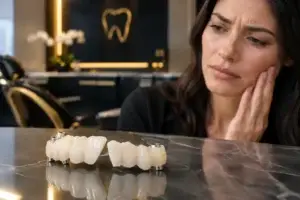

A full-arch restoration should do more than fill the spaces where teeth used to be. It should let you order what you want, speak without covering your mouth, smile in photos without calculation, and stop planning your life around loose dentures or failing bridges. For many patients, zirconia full arch dental implants represent the final step away from years of temporary repairs and toward fixed, natural-looking teeth designed for daily life.
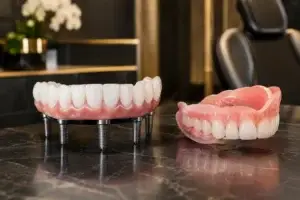
The phrase can be confusing because it describes two important components of treatment. In most full-arch cases, titanium dental implants are placed in the jawbone as the foundation. A custom zirconia bridge is then secured to those implants. The implants provide stability beneath the gumline; zirconia provides the visible teeth you bite, speak, and smile with.
For the right patient, this pairing can offer exceptional strength, refined esthetics, and a feeling that is far closer to natural teeth than removable dentures. But material alone does not determine the outcome. The experience of the surgical and restorative team, the treatment plan, the bite design, and the quality of the final bridge all matter.
What Makes a Zirconia Full Arch Different?
Zirconia is a high-performance ceramic known for its durability and lifelike appearance. When crafted as a full-arch bridge, it can replace an entire upper or lower set of teeth with one fixed restoration. It does not contain metal in the visible tooth structure, and it can be customized for tooth shape, translucency, color, and the character that makes a smile look like it belongs to the person wearing it.
This is different from a removable denture, which rests on the gums and can shift during meals or conversation. It is also different from a conventional bridge that depends on remaining natural teeth for support. A full-arch implant bridge is supported by implants, allowing forces to be distributed through the implant foundation rather than pressing on sore gum tissue.
Patients often ask whether zirconia itself is the implant. Usually, it is not. Titanium remains the established material for the implant posts in most advanced full-mouth treatment because of its long clinical history and ability to integrate with bone. The zirconia bridge is the premium visible restoration attached to that foundation.
Why Patients Choose Zirconia for Fixed Full-Arch Teeth
The appeal begins with function. A properly planned zirconia bridge is fixed in place, so it does not need to be removed overnight, held in with adhesive, or stabilized with a bulky palate. For patients who have spent years avoiding steak, apples, crunchy vegetables, or restaurant meals, that stability can change the rhythm of everyday life.
Zirconia also offers significant strength. Full-arch teeth handle substantial bite forces, particularly for patients who grind or clench. A high-quality zirconia restoration is engineered to withstand daily use while retaining its form and polish. That does not mean it is indestructible. Like natural teeth, it can be damaged by trauma, inappropriate biting habits, or an improperly balanced bite. Its durability depends on thoughtful design as much as the material itself.
Esthetics are equally important. Early full-arch restorations could look overly uniform, thick, or artificial. Modern digital planning and skilled in-house fabrication make it possible to create proportions, contours, and shade transitions that suit the face. The goal is not a generic row of white teeth. It is a smile that looks healthy, confident, and believable.
For patients dealing with heavily worn teeth, repeated crown failures, or an aging denture, this combination of strength and artistry can feel like a new beginning rather than another repair.
The Trade-Offs Deserve an Honest Conversation
Zirconia is a premium choice, but it is not automatically the right choice for every person or every stage of care. The condition of the bone, gum tissue, bite, smile line, and opposing teeth must be evaluated before selecting a final material. Patients with severe bone loss, active infection, failed implants, or a complex bite may need a more detailed treatment sequence before a definitive zirconia bridge is appropriate.
There is also a difference between an immediate fixed bridge placed on the day of surgery and the final zirconia bridge. When teeth are removed and implants are placed, the mouth needs time to heal and the implants need time to integrate. Many patients can leave with fixed teeth the same day, but those first teeth may be a carefully designed provisional restoration. The final zirconia bridge is typically delivered after the clinical team confirms healing, stability, bite function, and esthetic goals.
That distinction protects the investment. Clinics that treat every “teeth in a day” case as identical can overlook the biological realities that affect long-term success. Others promise results. Experience makes all the difference when deciding what can be delivered immediately, what should wait, and what will serve the patient best years from now.
Cost is another consideration. Premium materials, advanced imaging, experienced surgical care, custom laboratory work, and a final restoration built for function all affect the investment. A low advertised price may omit sedation, extractions, bone grafting, provisional teeth, the final bridge, or the follow-up care that makes treatment complete. A meaningful comparison looks beyond a starting price and asks exactly what foundation and final teeth are being provided.
Who May Be a Candidate for Zirconia Full Arch Dental Implants?
Candidates are not limited to people who have already lost all of their teeth. Many patients still have teeth, but those teeth are failing one by one. They may have advanced gum disease, loose teeth, repeated root canals, fractured crowns, widespread decay, or a collapsing bite that makes eating uncomfortable. At a certain point, continuing to repair individual teeth can become more expensive, less predictable, and more emotionally exhausting than rebuilding the entire arch.
Zirconia full arch dental implants may also be a strong option for people who are frustrated with removable dentures, uncomfortable implant-supported overdentures, or older full-arch bridges that chip, feel bulky, or no longer fit properly. Even patients who have been told they lack sufficient bone should seek a thoughtful expert evaluation. Severe bone loss can make treatment more complex, but it does not always eliminate the possibility of fixed teeth.
A complete assessment should include 3D imaging, a review of medical history, gum and bone evaluation, bite analysis, and a candid discussion about goals. Do you want a brighter, more youthful-looking smile? Is the primary goal to eat comfortably again? Are you concerned about a prior implant failure? The best plan answers both the clinical problem and the life problem behind it.
The Planning Is as Important as the Zirconia
A beautiful bridge cannot compensate for poorly positioned implants or an unstable bite. Full-arch treatment requires surgical, restorative, and laboratory decisions to work together from the start. Digital planning helps the team assess bone volume, map implant placement, plan the smile, and anticipate how the final teeth should support facial proportions and speech.
At Golpa NexGen Smiles, this level of planning is central to the Permanent Teeth in 24 Hours™ protocol. The objective is not simply to place implants quickly. It is to build a stable, fixed smile through a coordinated process that considers safety, healing, function, and the final result from the first consultation onward.
For travelers coming to Las Vegas, this coordination matters even more. A concierge-level experience should never mean rushed care. It means clear communication, an organized treatment schedule, and a team prepared to manage both straightforward and complex cases with the attention a major health decision deserves.
Living With a Zirconia Full Arch Bridge
Fixed does not mean maintenance-free. Daily home care remains essential. Patients need to brush thoroughly, clean beneath the bridge using the tools recommended by their clinical team, and keep regular professional hygiene visits. The goal is to protect the gum tissue and implant foundation around the bridge, not merely keep the visible teeth bright.
Patients should also avoid using the bridge as a tool to open packaging or bite hard nonfood objects. If grinding is a concern, a protective nightguard may be recommended. Routine follow-up allows the team to monitor bite forces, tissue health, and the screws or components supporting the bridge before a minor concern becomes a larger repair.
The reward for that care is substantial: fixed teeth that can restore comfort, confidence, and the freedom to be present in your own life again. The right next step is a personalized evaluation that treats your history, your goals, and your future smile with the seriousness they deserve.