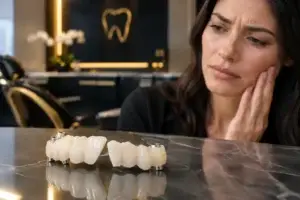

For someone who has lived with broken teeth, loose dentures, or a failing bridge, receiving fixed temporary teeth can feel life-changing. You can smile in public, speak without covering your mouth, and begin enjoying food again. Yet one question deserves a direct answer: how long can temporary implant teeth last?
Temporary implant teeth are designed to carry you through a specific stage of treatment, not to become a forgotten long-term substitute for your final smile. The right timeline depends on your bone, healing progress, bite forces, implant stability, and the material used. What matters most is having a plan that protects your implants while moving you toward a strong, beautiful final restoration.
How long can temporary implant teeth last?
Most temporary implant teeth are intended to be worn for several months, often about three to six months while the implants integrate with the bone and the gums heal. In more complex cases, the temporary phase may last longer. Extensive bone grafting, infection treatment, a history of failed implants, or the need to carefully rebuild a collapsed bite can all change the schedule.
A well-made provisional bridge can sometimes remain functional for a year or longer when necessary. That does not make it equivalent to a final bridge. Temporary materials are generally more prone to wear, chipping, staining, and fracture than premium final materials such as monolithic zirconia supported by a precisely designed titanium framework.
The real question is not simply whether a temporary can survive another month. It is whether it is still supporting healthy healing, a stable bite, and the treatment outcome you were promised. A temporary that is repeatedly breaking, loosening, or causing discomfort needs expert attention, not another quick repair.
Why a temporary bridge is part of the treatment, not the finish line
Temporary implant teeth, also called provisional teeth, serve several important purposes after implant surgery. They can provide immediate appearance and function while allowing the clinical team to observe how your gums heal and how your new bite feels in daily life. They also give the doctor a valuable opportunity to refine tooth shape, speech, lip support, and smile design before the final teeth are made.
For full-arch patients, this period can be particularly valuable. Years of missing teeth or worn-down restorations may have changed the way the jaws meet. Rebuilding that relationship requires careful planning, not guesswork. A provisional bridge lets the team test the new position before committing to the final restoration.
That said, “temporary” should never mean flimsy or careless. A properly designed temporary bridge must be comfortable, stable, hygienic, and appropriate for the forces placed on it. Experience makes all the difference when planning immediate teeth that protect both the implants and the long-term result.
What determines how long temporary teeth can last
No two implant cases heal on the same clock. A patient with healthy bone and excellent implant stability may progress predictably, while someone with severe bone loss, advanced gum disease, uncontrolled diabetes, or a history of smoking may need a more cautious approach.
The material matters, too. Acrylic provisional bridges are commonly used because they can be adjusted during healing. They are effective for this purpose, but they are not intended to absorb years of heavy chewing without consequences. Patients who grind or clench their teeth can place extraordinary pressure on a temporary bridge, sometimes causing cracks or broken teeth even when the implants themselves are stable.
The design of the bridge and bite is equally important. An implant bridge does not have the same shock absorption as natural teeth. If the bite is too heavy in one area or the bridge is not engineered to distribute force appropriately, the temporary restoration may chip or fracture. Repeated breakage is not merely an inconvenience. It can be a signal that the bite, bridge design, or treatment plan needs a more thorough review.
Daily habits also make a difference. Using temporary teeth to bite hard foods, chew ice, open packages, or eat sticky candy can shorten their life considerably. During the healing period, many patients are asked to follow a softer diet and gradually reintroduce firmer foods only as directed.
When a prolonged temporary phase should raise concern
Some patients arrive after spending years in temporary teeth. They may have been told their final bridge was coming soon, only to face ongoing delays, recurring fractures, poor fit, or mounting repair charges. Others have a temporary restoration after failed implant treatment and are unsure whether their implants can support anything more permanent.
A longer temporary phase is not automatically a problem. Complex care sometimes requires patience, particularly when bone or gums need time to recover. The concern arises when there is no clear clinical reason, no defined next step, or no transparent discussion about the final materials, design, and timeline.
Consider seeking an expert review if your temporary teeth keep breaking, feel loose, trap food constantly, cause pain, or make it difficult to speak or chew. The same is true if you do not know whether your implants have fully integrated, what your final teeth will be made from, or why treatment has stalled. You deserve answers that are specific to your mouth, not vague assurances that another repair will solve the problem.
How to protect temporary implant teeth while you heal
Your temporary teeth need thoughtful care, even when they feel secure. Brush as instructed around the bridge and gumline, and use the cleaning tools recommended by your clinical team. For a fixed full-arch bridge, this may include a water flosser, specialized floss, or interdental brushes to clean beneath the restoration.
Keep follow-up visits. These appointments are where the team checks healing, adjusts your bite, monitors the implants, and addresses small issues before they become costly problems. Do not wait for a chip to become a major fracture or for mild pressure to become persistent pain.
It also helps to treat your temporary bridge according to its role. Choose foods that are appropriate for your stage of healing, cut firmer foods into smaller pieces, and avoid testing the bridge with hard or sticky foods. If you clench or grind, ask whether a protective nightguard is appropriate once your doctor determines it is safe.
Planning for final teeth that are built to last
The final restoration is where materials, design, and clinical judgment come together. The best long-term result is not simply the hardest material available. It is a restoration planned around implant position, facial aesthetics, bite mechanics, hygiene access, and your daily habits.
At Golpa NexGen Smiles, full-mouth treatment is digitally planned with the end result in mind, from surgical placement through the final restoration. That level of planning is especially meaningful for people who have already endured loose dentures, failed bridges, or an endless cycle of temporary fixes. Premium zirconia and titanium components are selected for durable function and natural-looking confidence, not to meet a bargain price point.
If you are currently in temporary implant teeth, do not assume you must accept discomfort or uncertainty as part of the process. Ask what stage of healing you are in, what clinical milestone must be reached before final teeth are made, and what the final bridge will be designed to do differently. A clear plan can turn a temporary chapter into the beginning of a smile that feels like your own again.