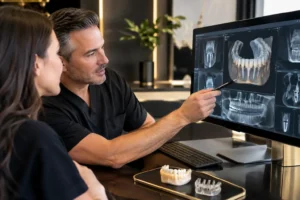

A full-mouth implant decision is not a casual dental appointment. For many patients, it follows years of broken teeth, loose dentures, painful chewing, repeated repairs, or the quiet frustration of hiding their smile. When treatment requires travel, a dental implant travel concierge service can make the experience far more organized and reassuring – but only when it supports exceptional clinical care rather than distracting from it.
The real value is not simply booking a hotel or suggesting a flight. It is coordinating a treatment journey around the needs of a patient who may be undergoing significant surgery, receiving fixed implant-supported teeth, and returning home with a new level of function and confidence.
A Dental Implant Travel Concierge Service Should Start With Clinical Planning
The travel details matter, but they should never come before the treatment plan. Patients considering full-arch dental implants need clarity about what their mouths require, how their bone and gums will support treatment, whether existing implants can be saved, and what will happen on each day of care.
That work should begin before anyone gets on a plane. A thoughtful virtual consultation allows the clinical team to review dental records, imaging when available, medical history, present concerns, and treatment goals. For someone with severely failing teeth, a poor-fitting bridge, or a history of failed implants, this early review is especially valuable. It can prevent a rushed trip built around assumptions that do not hold up once treatment begins.
At Golpa NexGen Smiles, travel coordination is built around digitally planned full-mouth treatment, not a generic dental tourism itinerary. The purpose is to help qualified patients arrive prepared for a focused clinical experience in Las Vegas, with their surgical and restorative care led by a team dedicated to complex implant treatment.
What Concierge Support Can Actually Change
Traveling for advanced dentistry can feel intimidating, particularly if you have avoided the dentist because of fear, embarrassment, or years of disappointing treatment. Good concierge support replaces unanswered questions with a clear plan. It helps patients understand where they need to be, when they need to arrive, what kind of accommodations make sense after surgery, and how to prepare for their return home.
More importantly, it creates continuity. A patient should not have to coordinate medical instructions, treatment timing, transportation considerations, and recovery needs alone while managing a major dental decision. Concierge guidance can help align those moving parts with the treatment schedule.
For full-mouth implant patients, that coordination may include arrival timing before surgery, local lodging guidance, plans for a companion, post-procedure transportation, dietary expectations, and a structured follow-up schedule. The exact arrangement depends on the complexity of the case and the patient’s overall health. Someone receiving straightforward full-arch treatment may have different needs than a patient with extensive bone loss, prior implant failures, or a complicated medical history.
Concierge support should feel personal, but it must also be practical. It cannot eliminate recovery or turn surgery into a vacation. What it can do is remove avoidable stress, so the patient can concentrate on healing and adjusting to the beginning of a new smile.
Experience Matters More Than a Convenient Itinerary
A polished travel experience is valuable. It is not, however, a substitute for surgical judgment, quality materials, or long-term restorative planning.
Many clinics market low-cost implants and fast results. Some patients learn too late that the advertised price did not account for extractions, sedation, bone grafting, provisional teeth, complications, repairs, or the final restoration. Others receive a treatment plan without a meaningful discussion of implant position, bite design, material strength, or how the teeth will function years from now.
That is why a destination practice should be judged by more than its hospitality. Ask who is directing the surgery and restorative process. Ask how often the team treats full-mouth cases, including patients with advanced bone loss or failed prior work. Ask whether the facility meets recognized safety standards, what materials will be used, and whether the final teeth are designed for long-term strength as well as appearance.
For patients who have already spent years paying for patchwork dentistry, the difference is significant. A premium plan should be based on the reality of the mouth in front of the doctor, not on a one-size-fits-all promotion. Others promise results. Experience makes all the difference when the goal is fixed teeth that look natural, feel comfortable, and support everyday life.
The Travel Timeline: What Patients Can Expect
A well-managed implant trip starts with decisions made at home. Before travel, patients should complete their virtual consultation, provide requested records, discuss medications and medical clearance requirements, and receive instructions about what to bring. This is also the time to arrange for a companion if recommended and to ask direct questions about the days following treatment.
Once in Las Vegas, the clinical team confirms the details that guide treatment. Advanced imaging, digital planning, examinations, and diagnostic records allow the doctor to verify the surgical and restorative approach. In comprehensive full-mouth care, precision at this stage is essential. The implants, bite, smile design, and provisional restoration must work together.
For appropriate candidates, Dr. Mike Golpa’s Permanent Teeth in 24 Hours™ protocol is designed to replace failing or missing teeth with fixed, implant-supported teeth in a focused treatment experience. That does not mean every case is identical or that recovery is instant. Healing still takes time, and final restorative care follows the biological process of integration. It means patients may be able to leave the surgical phase with fixed teeth rather than facing the instability and inconvenience of removable dentures.
After treatment, the focus turns to rest, prescribed care, a soft-food diet, and scheduled communication with the practice. Patients should understand exactly how to reach the team with questions once they return home. A destination provider has a responsibility to make that follow-up process clear, not leave patients wondering what happens after the flight home.
Who Benefits Most From Traveling for Implant Care?
Travel is not necessary for every dental need. A single implant, routine crown, or uncomplicated cosmetic procedure may be handled well by a trusted local dentist. Traveling becomes more compelling when the case calls for a higher level of full-mouth expertise or when a patient has not found confidence in local options.
Patients often consider destination treatment when they are living with failing teeth throughout the mouth, unstable dentures, repeated bridge failures, or implants that have become painful, loose, or aesthetically disappointing. It can also be the right path for someone who has been told their bone loss is too severe, who has spent too long in temporary teeth, or who wants an expert second opinion before agreeing to irreversible treatment.
The same principle applies to cosmetic reconstruction. Patients who still have natural teeth but need extensive veneers, crowns, or rebuilding benefit from a team that sees the whole smile, not just isolated teeth. Function, facial balance, bite stability, tooth color, and long-term durability all deserve consideration.
Questions Worth Asking Before You Commit
Before choosing any dental implant travel concierge service, look beyond attractive photos and broad promises. A serious provider should answer detailed questions without pressure. You should understand the credentials of the surgical facility, the experience of the doctor, the expected materials, the number of visits required, what the quoted treatment includes, and how complications or adjustments are handled.
It is also wise to ask whether your treatment is being planned from comprehensive diagnostics or from a limited estimate. Find out whether the provider regularly handles revisions and failed implant cases. A practice that understands complications is more likely to plan carefully to avoid them.
Finally, be honest about your priorities. If the lowest advertised price is the deciding factor, destination full-mouth care may become a costly gamble. If your priority is durable function, refined aesthetics, safety, and a team prepared for complexity, a higher level of planning is worth considering.
A new smile can be a new beginning, but the confidence it creates should rest on more than a convenient flight and a beautiful hotel. Choose a team whose concierge care supports what matters most: expert treatment, thoughtful recovery, and fixed teeth designed to help you eat, speak, laugh, and live freely again.