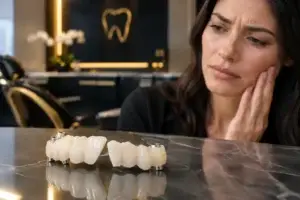

A broken full arch dental bridge is more than an inconvenience. When a fixed bridge cracks, chips, loosens, or separates from an implant component, every meal can become a calculation. You may be avoiding certain foods, speaking carefully, hiding your smile, or wondering whether the implants beneath it have also failed. The right next step depends on what broke, why it broke, and whether the underlying implant foundation is still healthy.
A visible fracture does not automatically mean you need to start over. But it should never be treated as a cosmetic issue alone. Full-arch restorations are precision-engineered systems. A problem in the bridge can be a sign of bite overload, material fatigue, loose hardware, implant stress, or a design that was never adequately suited to your anatomy and habits.
Do Not Ignore a Broken Full Arch Dental Bridge
Many patients try to manage a damaged bridge for weeks or months, especially if it is not painful. That delay can turn a repairable problem into a more complicated one. A rough edge can irritate soft tissue. A crack can expand under chewing pressure. A loose restoration can create repeated force on the implants or allow bacteria to collect where you cannot clean effectively.
If a piece of the bridge has detached, save it if possible and avoid using household adhesives. Do not attempt to glue a fixed implant bridge back into place. Adhesives can interfere with a clinical repair, trap bacteria, or prevent your doctor from properly evaluating the connection between the bridge and implants.
Contact an experienced full-arch implant provider promptly, particularly if you notice swelling, bleeding, drainage, a bad taste, pain when biting, mobility in the bridge, or an implant that seems loose. These symptoms deserve timely attention because they can point to an issue beyond the restoration itself.
What May Have Actually Failed?
Patients often say their implants are broken when the visible teeth are damaged. In reality, several different parts of a full-arch system can fail, and each calls for a different solution.
The Bridge Material Has Chipped or Cracked
Older acrylic bridges, porcelain-over-metal restorations, and some composite materials can wear, chip, stain, or fracture over time. A small cosmetic chip may be repairable. A crack running through a load-bearing area, however, can compromise the entire structure and may require replacement.
Material matters, but design matters just as much. A restoration must be thick enough in the right areas, supported correctly, and shaped to distribute biting forces predictably. A beautiful bridge that is too thin or poorly engineered for the bite can repeatedly break.
A Screw or Abutment Has Loosened
Full-arch bridges are commonly secured to implants with screws and connecting components. If one loosens, you may feel movement, hear a click, notice a gap, or experience an altered bite. The bridge can sometimes be removed, inspected, cleaned, and resecured. Yet a loose screw is not simply something to tighten and forget. The cause must be identified, whether it is bite pressure, an ill-fitting framework, wear, or a deeper implant issue.
The Titanium Framework Is Fractured
The internal framework is the structural backbone of many full-arch bridges. If it fractures, a surface repair may hide the problem without restoring long-term strength. A fractured framework often means the restoration needs to be remade, with a careful review of the bite, implant positions, and material selection.
An Implant or Surrounding Bone Is Compromised
This is the concern patients understandably fear most. Implant mobility, persistent infection, bone loss, or a fracture of an implant component can change the treatment plan significantly. Still, one compromised implant does not always mean every implant must be removed. The key is a comprehensive evaluation that looks at the entire foundation rather than offering a quick fix based on the visible damage.
Why Full-Arch Bridges Break
A bridge rarely fails for one reason alone. Daily chewing forces are substantial, particularly in patients who clench or grind their teeth at night. If the bite is uneven, a few areas may absorb more pressure than the restoration was designed to handle.
The original treatment can also influence longevity. Implant number and placement, bone quality, the angle of implants, framework material, bridge thickness, and access for hygiene all affect performance. So does the use of a protective nightguard when appropriate.
There is also a practical reality: not every full-arch bridge is made to the same standard. Low advertised pricing can reflect shortcuts in planning, materials, laboratory work, follow-up care, or the time devoted to case design. Others promise results. Experience makes all the difference when the goal is a restoration that looks natural and holds up to real life.
How a Specialist Evaluates the Damage
A meaningful evaluation begins with more than a quick look at the broken area. Your doctor should assess the bridge, the bite, the gums, the implant connections, and the supporting bone. Digital imaging and a detailed clinical examination help determine whether the problem is isolated to the bridge or involves the implant foundation.
The restoration may need to be removed so the provider can inspect the titanium components beneath it. This is especially important if the bridge has been repeatedly repaired, feels unstable, or has a history of screw loosening. A full-arch specialist should also examine whether the contours of the bridge allow you to keep the tissue underneath clean. A bridge that is difficult to clean may contribute to inflammation and bone loss over time.
For patients who have been told their only option is to remove everything and begin again, a second opinion can be valuable. Conversely, if you have received a quick repair recommendation after multiple failures, it is reasonable to ask whether the underlying cause has truly been addressed.
Repair or Replacement: Which Is the Better Choice?
A minor chip or a single loose component may be repaired when the framework is sound, the implants are stable, and the bite is well managed. Repair can be an appropriate, conservative option when it restores both function and structural integrity.
Replacement becomes more likely when damage is extensive, the bridge has fractured more than once, the framework is compromised, the material is worn beyond predictable repair, or the restoration was poorly designed from the start. A new bridge also may be the better long-term choice when it is difficult to clean, creates speech concerns, looks bulky, or no longer gives you the confident appearance you expected.
For many complex cases, premium zirconia paired with a properly designed titanium foundation offers exceptional strength, lifelike appearance, and resistance to staining. It is not the right answer for every patient simply because it is a premium material. The final choice should reflect your bite, implant configuration, cosmetic goals, and the clinical space available for a durable restoration.
Protecting Your Implants While You Decide
Until you are seen, favor softer foods and avoid biting with the damaged area. Do not chew ice, hard candy, nuts, or tough meats with a cracked or unstable bridge. Continue cleaning as instructed, but be gentle around any exposed, sore, or bleeding tissue.
If you have a nightguard and it still fits without placing pressure on a damaged area, ask your dental team whether you should continue wearing it. If the bridge has shifted or feels different, do not force the guard into place. The goal is to reduce unnecessary stress while preserving access for a proper assessment.
A Better Path After Repeated Bridge Problems
Living with a broken bridge can feel like another chapter in years of dental disappointment. It does not have to remain that way. At Golpa NexGen Smiles, complex full-arch cases are evaluated through advanced digital planning, premium restorative materials, and the perspective that comes from decades focused on full-mouth implant treatment.
Whether your bridge needs a targeted repair, a complete remake, or a more comprehensive reconstruction, you deserve a recommendation built around long-term function, not a temporary patch. Fixed teeth should let you eat comfortably, speak naturally, smile without hesitation, and move forward with confidence. A careful expert review can turn a frustrating failure into the beginning of a stronger, more dependable smile.