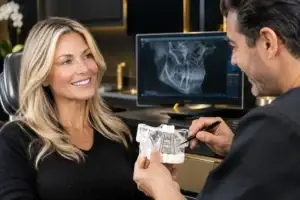

When you have been told there is not enough bone for dental implants, it can feel like the door has closed on fixed, confident teeth. For carefully selected patients, zygomatic implants for severe bone loss may open a different path – one that uses the strong cheekbone rather than relying entirely on the depleted bone of the upper jaw.
This is not a shortcut, and it is not an answer for every implant patient. Zygomatic treatment is advanced surgery that demands precise planning, specialized surgical experience, and a restorative team that understands what must happen after the implants are placed. When those elements come together, it can help the right person move beyond loose dentures, repeated grafting conversations, or years of temporary teeth.
Why Severe Bone Loss Changes the Implant Conversation
Traditional dental implants are placed in the jawbone. After teeth have been missing for years, or after gum disease, infection, trauma, or poorly fitting dentures, that bone can gradually shrink. In the upper back jaw, the sinus also limits available bone height. A conventional plan may call for bone grafting, sinus elevation, healing time, and then implant placement months later.
Grafting can be an excellent option in many cases. But it is not automatically the best option simply because bone is limited. Some patients want to avoid multiple surgical stages. Others have already undergone grafting without reaching a dependable result. Still others have been living in a removable denture or a failing bridge long enough and want a well-considered route to fixed teeth.
The critical question is not, “Do I have bone loss?” It is, “What is the safest and most durable way to create stable support for my new smile?” That answer requires a complete clinical evaluation, not a quick scan and a low advertised price.
How Zygomatic Implants for Severe Bone Loss Work
Zygomatic implants are longer than conventional implants. Rather than anchoring only in the upper jawbone, they extend into the zygomatic bone, commonly called the cheekbone. This bone is naturally dense and can provide stable anchorage even when the upper jaw has lost substantial volume.
In many full-arch cases, zygomatic implants are used alongside conventional implants placed in areas of the upper jaw where enough healthy bone remains. Together, they can support a fixed full-arch restoration. The goal is not merely to place implants. The goal is to create a stable foundation for teeth that feel secure, function comfortably, and are designed around your facial appearance and bite.
For qualified patients, immediate provisional teeth may be possible after surgery. That is where experience makes all the difference. Immediate loading depends on implant stability, bone quality, bite forces, medical considerations, and the design of the temporary restoration. A responsible team does not promise the same timeline to every patient before those factors have been evaluated.
What Makes This Different From Conventional Implant Treatment
The greatest advantage is that zygomatic implants can reduce or eliminate the need for extensive upper-jaw grafting in select cases. That may mean fewer treatment stages and less time spent waiting for grafted bone to heal before fixed teeth become possible.
The trade-off is complexity. Zygomatic implants sit near important facial structures, including the sinuses and orbit. Placement requires sophisticated 3D imaging, digital surgical planning, a controlled surgical environment, and a clinician with deep experience in complex full-mouth implant care. This is not a procedure to choose based on a promotional promise of “teeth in a day.”
Who May Be a Candidate?
Candidates often have advanced upper-jaw bone loss and are seeking a fixed alternative to a denture. They may have been told they need extensive grafting, have worn a denture for many years, or have failing upper implants that no longer provide reliable support. Some are frustrated by a bridge that breaks, feels bulky, or has become difficult to clean.
A patient may also seek an expert second opinion after receiving a treatment plan that feels incomplete or overly generic. Severe bone loss cases deserve more than a one-size-fits-all recommendation. The condition of the gums, remaining teeth, sinuses, existing implants, bite, facial structure, health history, and aesthetic goals all matter.
Zygomatic implants are typically used in the upper jaw, not the lower jaw. For lower-jaw bone loss, other approaches may be more appropriate, such as angled implants, strategic use of available bone, grafting, or a different full-arch design. A trustworthy consultation explains the options rather than forcing every problem into one procedure.
The Planning Stage Is Where Outcomes Are Protected
Patients often focus on the surgery date. Yet the highest-stakes work begins well before treatment day. High-resolution 3D imaging allows the surgical team to evaluate bone volume, sinus anatomy, and the exact route for each implant. Digital planning also helps coordinate the surgical plan with the final restorative goal: tooth position, smile line, speech, bite, and facial support.
That restorative endpoint matters. Implants can be technically integrated and still lead to disappointment if the teeth are too bulky, the bite is unstable, or the smile does not feel like you. Full-mouth reconstruction requires surgical and restorative judgment working in concert.
At Golpa NexGen Smiles, advanced planning is paired with an in-house approach to full-mouth treatment, premium zirconia and titanium materials, and AAAHC-accredited surgical care. For patients traveling to Las Vegas, concierge support can also remove much of the uncertainty that often accompanies treatment away from home.
What Recovery and the Final Smile Can Look Like
Recovery varies. Swelling, bruising, fatigue, and temporary dietary limits are common after major implant surgery. Your clinical team should give you clear instructions for medications, hygiene, nutrition, follow-up, and when to contact the office. Patients who expect a calm, comfortable recovery without any adjustment period are likely to be disappointed. This is meaningful treatment, and your body needs time to heal.
If an immediate fixed provisional is appropriate, it serves a vital role during healing. It allows you to leave with teeth while the implants integrate, but it is not the final restoration. The provisional must be cared for carefully, and diet restrictions are essential during this phase. Chewing hard foods too early can compromise the treatment you worked so hard to achieve.
The final bridge is designed after healing and detailed evaluation of the bite, speech, tissue contours, and appearance. Premium zirconia is widely valued for its strength and lifelike appearance, but material selection and design should always be personalized. A final restoration should be beautiful, but beauty without function is not enough. It must also be hygienic, durable, and comfortable to live with every day.
Questions Worth Asking Before You Commit
If you are considering zygomatic implants, ask who will perform the surgery, how often they manage severe bone loss cases, and how the surgical and restorative teams coordinate. Ask whether your plan includes detailed 3D imaging, what type of temporary teeth you will receive, and what the process is if complications or adjustments arise.
You should also ask what alternatives were considered. A practice that can explain why zygomatic implants are appropriate for your anatomy – or why another approach may be better – is giving you information you can use. The right answer is not always the fastest answer, but it should be clear, evidence-based, and centered on your long-term outcome.
Price deserves a thoughtful conversation as well. Complex implant care involves advanced diagnostics, surgical expertise, laboratory precision, premium materials, and ongoing restorative responsibility. A bargain treatment plan can become expensive if it leads to repeated repairs, failed implants, or a bridge that must be replaced prematurely.
A new smile can be a new beginning, especially after years of hiding your teeth or planning meals around what you can manage. If severe bone loss has left you feeling out of options, seek a detailed expert review. The right plan should give you more than hope for fixed teeth – it should give you confidence in how you will get there.