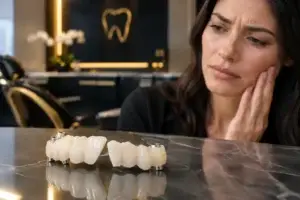

A loose denture can change more than a meal. It can make you avoid steak, laugh with a hand over your mouth, or wonder whether adhesive will hold through an important conversation. When considering fixed dentures versus removable dentures, the real question is not simply which option replaces teeth. It is which solution gives you the comfort, function, appearance, and long-term confidence you want from your next smile.
Both options can restore missing teeth. Yet they work very differently, place different demands on your daily routine, and may be appropriate for very different clinical situations. The right choice depends on your bone health, medical history, goals, budget, and the level of permanence you expect.
What Are Removable Dentures?
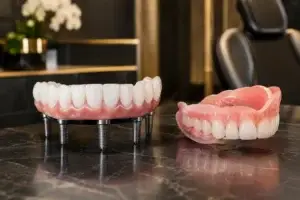
Traditional removable dentures are custom prosthetic teeth set in an acrylic base that rests on the gums. A full denture replaces all teeth in an upper or lower arch. A partial denture fills spaces when some natural teeth remain.
Modern dentures can look significantly more natural than older versions, particularly when they are thoughtfully designed. They remain a viable choice for some patients, especially those seeking a non-surgical solution or a shorter-term way to restore appearance.
The limitation is that conventional dentures rely on suction, gum tissue, adhesive, or clasps rather than being anchored directly to the jaw. The upper denture often gains support from the palate, while a lower denture is more prone to shifting because there is less surface area for stability. Over time, natural bone loss after tooth loss can change the shape of the jaw, making a once-comfortable denture fit less reliably.
What Are Fixed Dentures?
Fixed dentures are full-arch restorations secured to dental implants placed in the jawbone. The restoration is attached by a qualified implant dentist and is not removed by the patient at night. Despite the name, this is not the same as a traditional removable denture. It is a fixed, implant-supported bridge designed to replace an entire upper or lower arch of teeth.
A full-arch fixed solution typically includes strategically positioned implants, a precision-designed framework, and a final bridge made from durable materials such as premium zirconia and titanium. The implants act as artificial tooth roots, supporting the restoration without covering the palate or relying on denture adhesive.
For appropriate candidates, this approach can provide the closer-to-natural experience many people are seeking: teeth that stay in place while speaking, smiling, and eating. At Golpa NexGen Smiles, digitally planned full-mouth implant care is built around creating fixed teeth with a treatment process designed for safety, accuracy, and lasting function.
Fixed Dentures Versus Removable Dentures: The Daily Difference
The most obvious distinction is stability. Removable dentures can move under pressure, particularly on the lower jaw. Even a well-made denture may require patients to adjust how they chew, choose softer foods, or use adhesive for added confidence. Small movements can also create rubbing and sore spots.
Fixed implant-supported teeth are anchored to implants, so they do not slip in the way traditional dentures can. Patients can generally speak more naturally and eat a wider variety of foods once healing is complete and their clinician clears them to do so. That stability is often the turning point for people who have spent years planning meals around what their dentures can handle.
There is also a difference in how each option feels. A removable upper denture commonly covers the roof of the mouth, which can affect taste and create a bulky sensation. Fixed upper teeth do not typically cover the palate. For many patients, that change makes everyday life feel less like wearing a prosthesis and more like having teeth again.
Appearance matters, too. Both treatments can be attractive when created with skill. However, a fixed full-arch restoration allows the clinical team to plan tooth shape, smile line, lip support, bite, and facial proportions together. This is especially meaningful for patients whose failing teeth, worn bridges, or severe dental breakdown have changed the way they look when they smile.
The Bone Loss Question Many Patients Miss
After teeth are lost, the jaw no longer receives the stimulation normally created by chewing through tooth roots. Bone can gradually resorb, affecting facial support and denture fit. A removable denture replaces visible teeth, but it does not replace tooth roots or directly stimulate the jawbone.
Dental implants help transfer chewing forces to the bone. They may help preserve bone in the areas surrounding the implants, although every patient’s biology and treatment plan are different. For someone with significant bone loss, implant treatment may require advanced planning, additional procedures, or a specialized approach. This is one reason a comprehensive diagnostic review matters more than a quick quote based on an X-ray alone.
Severe bone loss does not automatically mean fixed teeth are impossible. It does mean the case should be evaluated by a team with substantial full-mouth experience, especially if you have been told you lack enough bone, have failed implants, or have worn a removable denture for years.
Treatment Time, Care, and Maintenance
Removable dentures are usually less invasive to begin with. Once impressions and design are complete, the denture can be delivered without implant surgery. They must be removed for cleaning and should be soaked or stored as instructed. Regular adjustments, relines, and eventual replacement are common as the gums and bone change.
Fixed dentures require surgery, healing, and a carefully coordinated restorative process. In certain cases, patients can receive a fixed full-arch provisional restoration on the day of surgery, followed later by a final bridge after healing and clinical evaluation. “Teeth in a day” should never be confused with skipping planning or settling for a rushed permanent result. The protocol, materials, and the experience of the surgical and restorative team matter.
Fixed teeth still require disciplined home care. You will brush, use specialized cleaning tools around the bridge, and attend professional maintenance visits. The bridge itself is fixed, but it can be periodically removed by the clinical team when appropriate for inspection and cleaning. Implant health depends on ongoing hygiene, bite management, and regular follow-up.
Cost Is More Than the Initial Price
Removable dentures generally have a lower up-front cost. For some patients, that is the deciding factor, and it may be a sensible one. But it is worth looking beyond the delivery day. Adhesives, relines, repairs, replacements, and the ongoing effects of bone changes can add to the long-term cost and frustration.
Fixed implant-supported dentures require a greater initial investment because treatment involves diagnostics, surgery, implants, high-quality components, laboratory design, and a final restoration. A low advertised implant price may exclude critical elements such as anesthesia, extractions, temporary teeth, final materials, or follow-up care. It may also conceal compromises in the clinical planning needed for complex mouths.
The better question is not, “Which option is cheapest?” It is, “What am I receiving, who is responsible for every stage, and what result am I likely to live with over time?” For patients who have already paid repeatedly for broken bridges, emergency repairs, and temporary solutions, that distinction can be profound.
Who May Be Better Suited to Each Option?
Removable dentures may make sense for patients who cannot undergo implant surgery, prefer a non-surgical route, need a lower initial cost, or want an interim solution while considering a more permanent plan. They can also serve as a practical temporary option during certain phases of treatment.
Fixed dentures may be an excellent fit for people who are tired of looseness, avoid favorite foods, want teeth that remain in place, or need to replace failing teeth and bridges across an entire arch. They are particularly compelling for patients who value long-term stability and are prepared to invest in specialist-led treatment and maintenance.
No responsible provider should promise fixed teeth without reviewing your medical history, gum health, bone levels, bite, smile goals, and existing dental work. Complex cases deserve an expert second opinion, not a one-size-fits-all recommendation.
A new smile should not require you to negotiate with your teeth every day. Whether your best path is removable dentures or a fixed full-arch restoration, choose a team that listens to what has not worked, explains the trade-offs clearly, and plans for the life you want to return to.